Aldridge Creek Odor and Surface Film
A resident reported a possible sewage problem near Green Cove Road. Here is what follow-up established — and what it did not.
Bottom line
Campaign follow-up included multiple visits to the area. Odor varied between visits, and a visible surface film was observed in the water. The available evidence did not establish that the odor or film was raw sewage, identify a leak, or tie the observation to a documented sanitary-sewer overflow.
What prompted the review
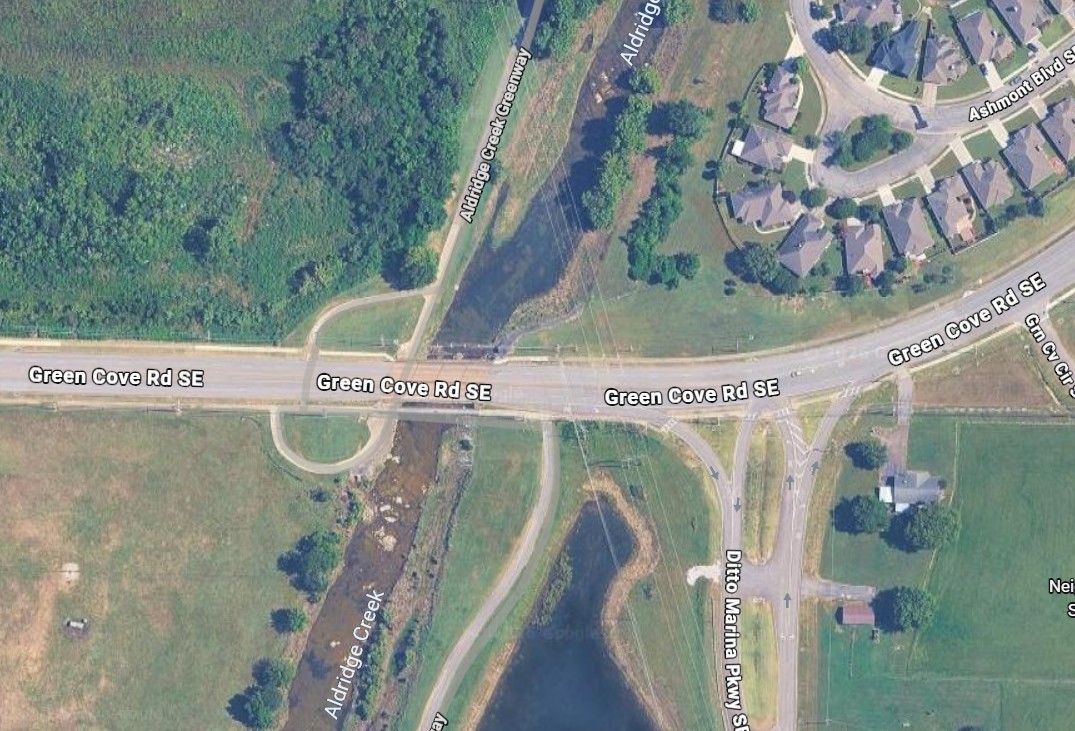
A resident contacted the campaign with concerns about odor and material visible in Aldridge Creek near Green Cove Road. The resident believed leaking sewer infrastructure or sewage overflows could be responsible.
That report was treated as a question to investigate, not as a proven conclusion. The resident's identity and personal correspondence are not being published.
What follow-up found
- The area was visited more than once.
- The strength and character of the odor varied between visits.
- Sanitary-sewer infrastructure in the area includes venting that can produce odor. That is one possible explanation, but it does not establish or rule out a leak.
- A visible surface film was observed near the creek and culvert area.
- No laboratory result, agency determination, or verified overflow record reviewed by the campaign identified the material or confirmed its source.
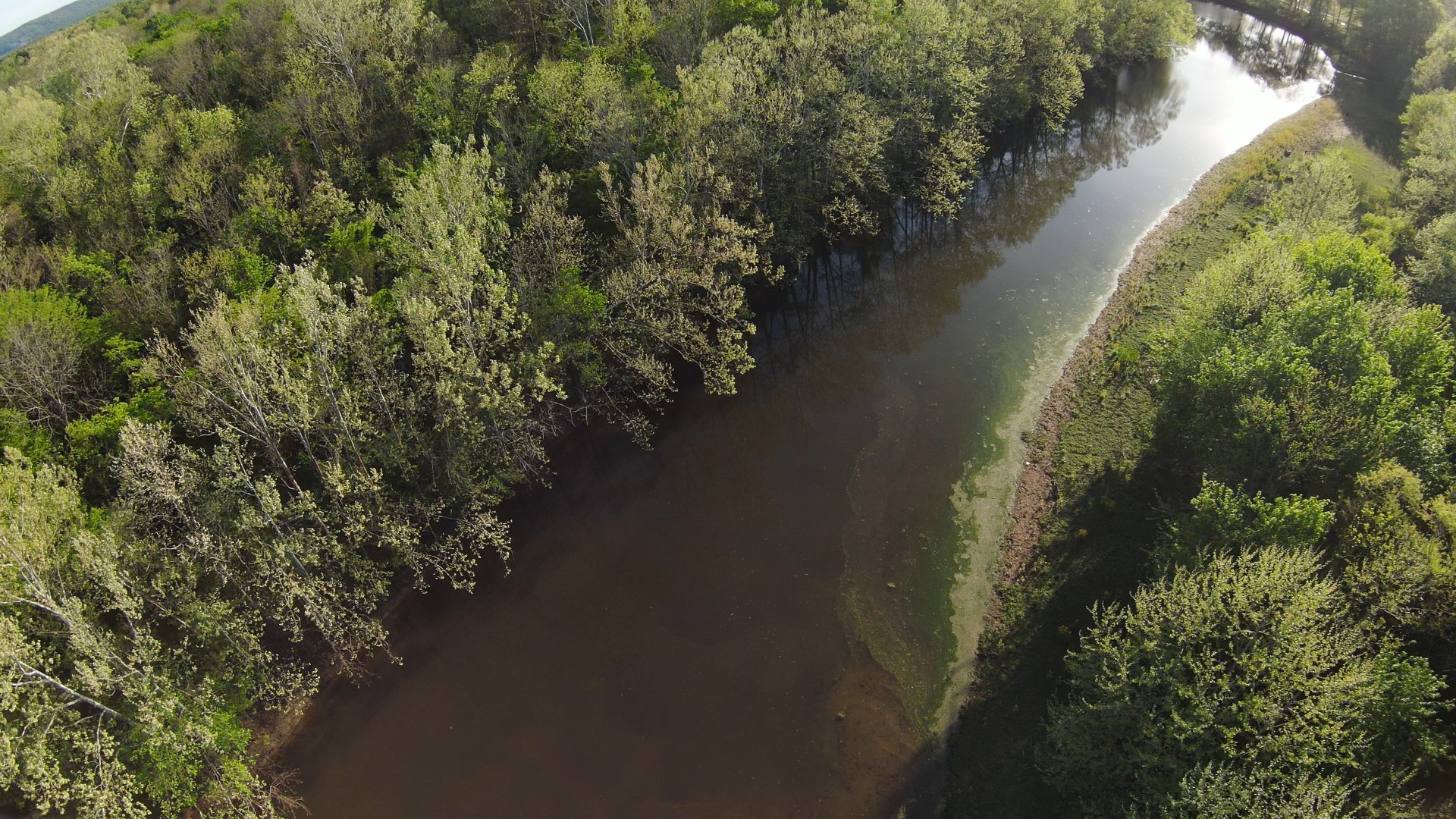
The drone photograph below documents the appearance and location of the surface film. It cannot identify the material or its source.
What the public record adds
A 2002 Alabama Department of Environmental Management total maximum daily load report identified Aldridge Creek as impaired for organic enrichment and low dissolved oxygen. The report discussed limited data and attributed the condition primarily to nonpoint sources, including siltation and organic loading. That historical watershed finding does not identify the source of a later odor or film at this location.
A 2025 ADEM draft permit rationale for the South Parkway Water Treatment Plant also references the 2002 impairment finding and says nonpoint sources were identified as the primary driver. That draft permit concerns filter-backwash discharge from a water treatment plant; it is not evidence for or against a sanitary-sewer leak at Green Cove Road.
ADEM's public sanitary-sewer-overflow map displays reported overflows only for a limited period after an event ends. A location's absence from the current map therefore does not prove that no historical event occurred.
What would answer the question
- Targeted water sampling during dry-weather, low-flow conditions, with laboratory analysis capable of distinguishing likely sources.
- A review of sanitary-sewer overflow, service-call, inspection, and maintenance records for the relevant time and location.
- Inspection of nearby manholes, vents, force mains, and creek crossings by the responsible utility staff.
- A public explanation of the findings, including what was tested and any corrective work completed.
Until that evidence exists, calling the observed material “raw sewage” would go beyond what has been verified. Dismissing the resident's concern without testing would also go beyond the evidence.
Read the source material
- ADEM — 2002 Aldridge Creek organic enrichment/dissolved oxygen TMDL
- ADEM — 2025 South Parkway Water Treatment Plant draft permit rationale
- ADEM — 303(d) impaired-waters information and map
- ADEM — eMaps and sanitary-sewer-overflow map explanation
- City of Huntsville — Water and Sewer
- City of Huntsville — Wastewater collection and treatment
Do you have records that clarify this?
Inspection results, sampling data, maintenance records, and corrections are welcome. New evidence will be evaluated and the page updated when warranted.